
Sustainability is a business imperative at Sephaku Cement. Our business processes are aligned with our purpose, and we recognise that long-term competitiveness requires us to combine sound financial performance with social responsibility, environmental stewardship and broader economic prosperity.
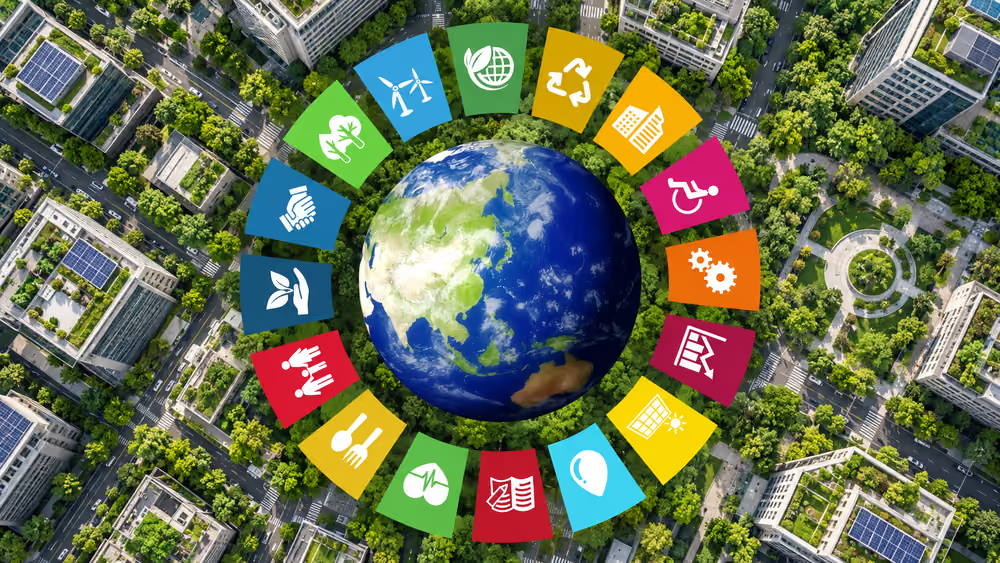
Together, these dimensions reflect our commitment to sustainable development and long-term value creation. Our sustainability approach is focused across three key areas: Social, Environmental and Governance, and contributes to selected United Nations Sustainable Development Goals.
Made in South Africa for Africa’s builders.
As a responsible cement producer, we integrate sustainability across our operations. Through the implementation of our decarbonisation strategy, DangCircular circular-economy initiatives, resource efficiency and environmental stewardship, we continuously work to reduce our environmental footprint while creating sustainable value for our stakeholders and supporting a more resilient future.
Through DangCircular, we support a more circular approach to resource use by promoting waste reduction, recycling and reuse, helping to reduce waste sent to landfill and make better use of materials across our operations.
Our environmental commitments are guided by seven key priorities that support responsible and sustainable operations.
Implementing our decarbonisation roadmap.
Minimising water usage across our operations.
Reducing energy consumption through improved operational efficiency.
Working to reduce waste sent to landfill through optimised waste-management strategies and circular-economy practices.
Supporting ecosystem preservation and rehabilitation initiatives.
Adopting practices that improve and maintain healthy air-quality standards.
Remaining compliant with applicable regulations and maintaining our commitment to sustainable operations.
Our 7 Green Rules translate our environmental priorities into clear commitments for how we operate, while our Environmental Policy sets out the principles and management approach that guide continuous environmental improvement across the business.

Doing business responsibly, openly and by the rules.
Our Board of Directors provides strong ethical leadership and oversees the Group’s governance framework. Guided by the principles of accountability, transparency, fairness and responsibility, the Board is committed to sound governance practices that support sustainable growth, manage risk effectively and create long-term value for all stakeholders.
Strong governance provides the foundation for responsible decision-making and ensures that risk, compliance and stakeholder considerations remain integral to how the business operates and plans for the future.
Promoting integrity and responsible leadership throughout the organisation.
Supporting effective oversight, clear responsibilities and transparent business practices.
Identifying and managing risks that may affect the sustainable performance of the business.
Maintaining appropriate governance processes to support compliance with applicable requirements.
Considering the long-term interests of the business and its stakeholders.
Learn more about the governance structures, principles and practices that support ethical leadership, effective oversight and responsible decision-making across the Group.
Social
Building Together, Creating Lasting Impact
Sustainability starts with people. We invest in our employees through continuous learning and development, open communication and a culture of performance excellence that empowers our teams to contribute to the long-term success of Sephaku Cement.
Beyond our operations, we create shared value by partnering with local communities through the Torosesha Community Trust and broader community development initiatives. Our focus is on promoting inclusive economic growth through the development of local businesses, the creation of employment opportunities and skills development.
We help people build better opportunities locally.
Our Social Priorities
Employee Development
Investing in continuous learning and development to strengthen the skills and capabilities of our people.
Skills Development
Supporting initiatives that build knowledge, employability and economic participation.
Local Business Development
Creating opportunities that support the growth and participation of local businesses.
Employment
Contributing to employment opportunities within the communities in which we operate.
Community Partnerships
Working collaboratively with communities and stakeholders to create shared and lasting value.
Aligned Sustainable Development Goals